
It has finally happened.
At 2.30pm today, Friday 29th October 2021, the Archibald Baxter Memorial Garden was formally opened.
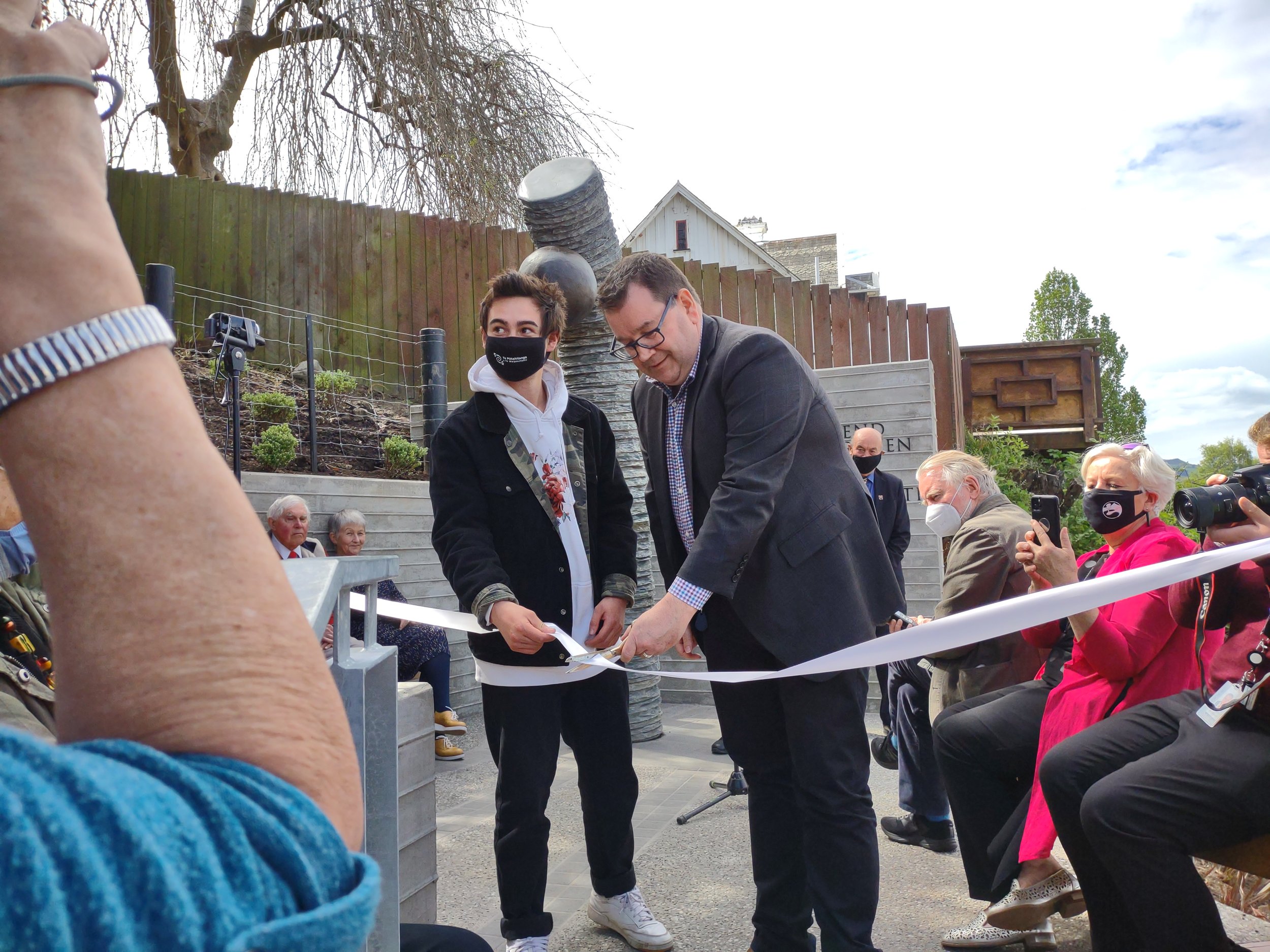
Well… the ribbon was cut by Deputy PM Grant Robertson and a family member of a conscientious objector at about 3.14pm.
The weather was very kind – no rain – about 16°C and no wind.
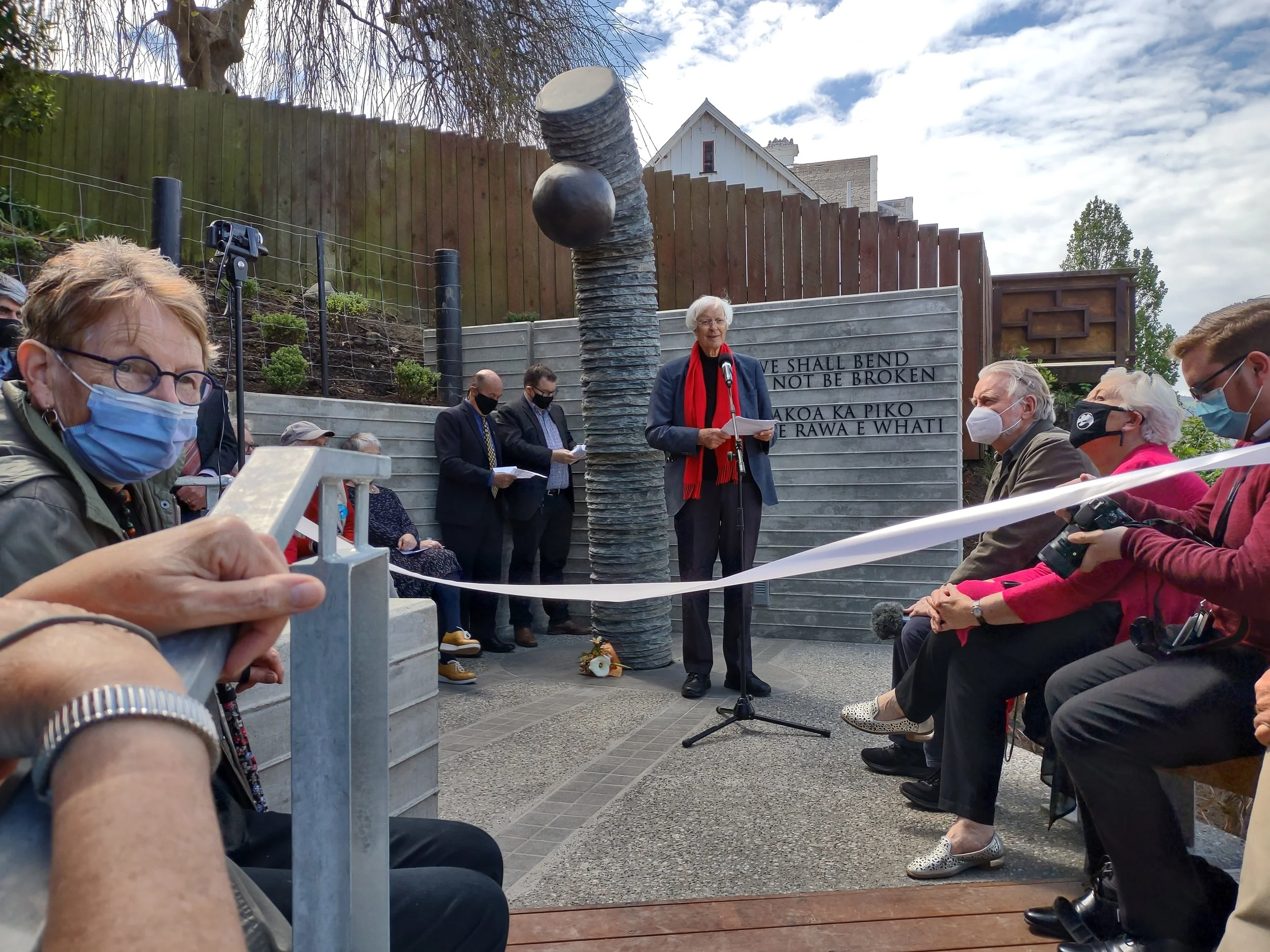
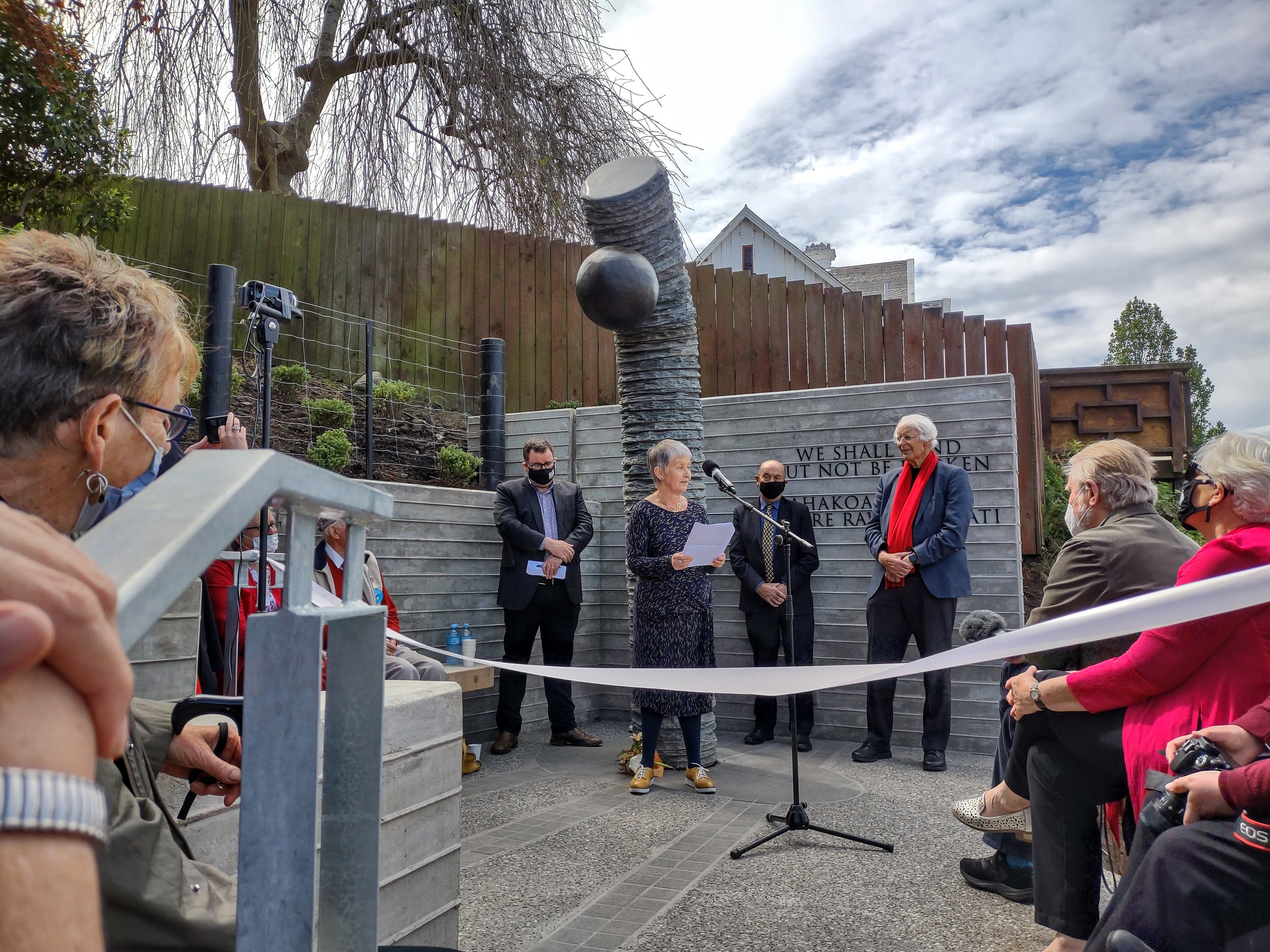
The sound system folk did a brilliant job and ensured that to 200 to 300 folk who were spread across the upper garden, garden, pavement and roadway were able to hear with absolute clarity.
Masks were very much in evidence – and we supplied a box of 100 for the odd one who forgot. We had special QR code tracers and hand sanitiser and chairs for folk whose legs are not what they were.
DCC organised a break in traffic (further kudos to them) so there was no extraneous noise or interruptions during the speeches.
The programme took place as per the programme you had on Labour Day.
I attach a copy of the speech delivered by the ever-energetic Prof Kevin Clements who has been the indefatigable spearhead of the Trust. Words cannot begin to say…
We arranged afternoon tea for families who needed to meet up and deal with emotions packed away for so long. We had to count to ensure that we didn’t exceed the 100 allowed (that we had catered for) and we got to No 67. That’s ideal – sharing those kinds of stories is very personal, intimate and intense. It was never to be a “bun fight”.
I think that Paddy Baxter of Baxter Design (no relative), Shane Woolridge (sculptor), Stuart Anderson and Ross Martin of Signal Associates (who were “clerk of the works”), Chris Dowall, Craig Docherty of Amalgamated Builders Ltd all did an utterly superb job (everyone went not only the extra mile, but the extra discounted mile for this cause) to bring credit to the struggle that Archie and the other conscientious objectors made. This is a key part of our history – some would wish it different – but their struggle is the reality of what happened and should be marked.
We remembered the many Supporters who would have been present but for Covid or infirmity – you were all in our thoughts as we stood today.
This was an action for Peace. There are thousands of good people who inspired it, many who contributed to it, many who worked for it. How remarkable is that?
Appreciatively
Alan